
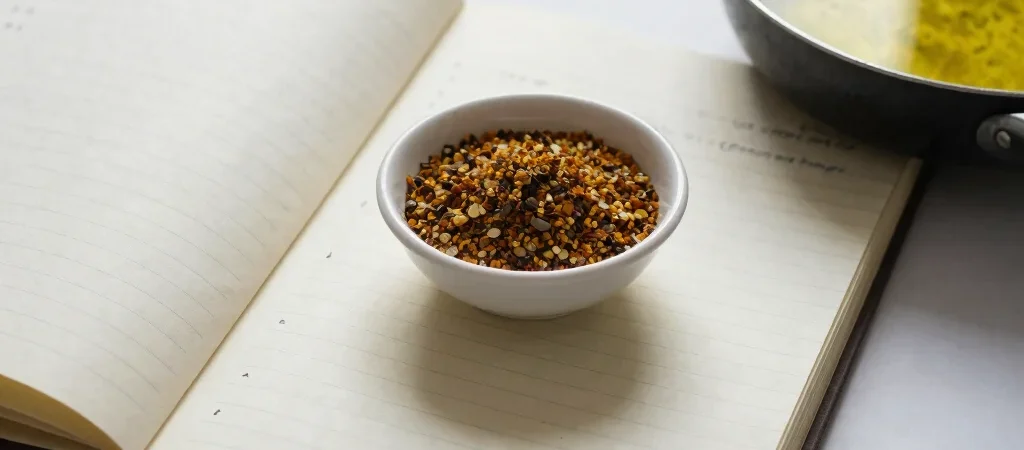
A handwritten recipe might say “a little” where a measuring spoon would be more useful. In many Bengali kitchens, the missing measure is part of the instruction: a remembered smell, a familiar sizzle, or the cook’s hand hovering over the pan. That knowledge deserves to be recorded alongside the ingredients.
The measure behind the words
Terms such as a pinch, a handful, or just enough are not failed attempts at precision. They often assume a shared kitchen history—someone has watched this dish being made before, or knows how it should look when the spices meet the oil. A recipe written for someone outside that circle needs to make more of that history visible.
Write down the sensory cues
Alongside the quantity of turmeric or panch phoron, note what changes in the pan: the aroma, the color, the sound. These details help a new cook make a decision instead of following a number blindly. They also preserve the particular method of one household without suggesting that every Bengali kitchen cooks the same way.
Keep the changes in view
Recipes change when ingredients are hard to find, time is short, or a cook simply prefers a different balance. Rather than treating those adjustments as departures from an original, write down who made them and why. The result is more than a usable recipe: it is a record of how a dish keeps moving between people.